This site is maintained by Zackery M. Heern, Associate Professor of Middle East and Islamic history at Idaho State University. Most of the content of the blog is related to the courses I teach, including Modern Iraq and Iran, Modern Middle East, Islam in the Modern World, and Middle Eastern History and Culture. Please feel free to follow the blog by entering your email below. You can also follow @zackeryheern on twitter.
Saturday, February 16, 2013
Tuesday, December 25, 2012
Najaf and Hawza Bibliography
Āl Maḥbūbah, Jaʻfar al-Shaykh Bāqir. Māḍī
al-Najaf wa-ḥāḍiruhā al-Najaf : Maṭbaʻat al-Ādāb, 1955-1958.
Amini, Muhammad Hadi, Muʻjam
rijāl al-fikr wa-al-adab fī al-Najaf khilāla alf ʻām Najaf? : s.n.,
1992
Amīnī, Muḥammad Hādī. Muʻjam al-maṭbūʻāt al-Najafīyah.
al-Najaf : Maṭbaʻat al-Ādāb, 1966
al-Asadi, Hasan Thaura
al-Najaf ‘ala al-inkliz, Baghdad: Wizarat al-I‘lam, 1975
Āṣafī, Muḥammad Mahdī. Madrasat al-Najaf wa-taṭawwur al-ḥarakah
al-iṣlāḥīyah fīhā. al-Najaf : [Dār al-Nuʻmān lil-Ṭibāʻah wa-al-Nashr, 1965]
Bahādilī, ʻAlī. al-Najaf : jāmiʻatuhā wa-dawruhā al-qiyādī Bayrūt,
Lubnān : Muʾassasat al-Wafāʾ, 1989.
Bahādlī, ʻAlī. al-Ḥawzah
al-ʻilmīyah fī al-Najaf : maʻālimuhā wa-ḥarakatuhā al-iṣlāḥīyah.
Bayrūt, Lubnān : Dār al-Zahrāʼ, 1993
Bahadli, Ahmad Kadhem. al-Najaf al-Ashraf wa Jama'taha al-Deenaiyya
Bahr al-‘Ulum, Introduction
to Amali Al-Shaykh Al-Tusi
Balāghī, ʻAbd al-Ḥujjat, Tārīkh-i Najaf-i ashraf va Ḥīrah Tehran,
Chāpkhāneh-yi Maẓāhirī, 1368 [1949
Dujaili, Ja'far Mousooa't al-Najaf al-Ashraf
(12 vol)
Faḍlī, ’Abd al-Hādī. Dalīl al-Najaf al-ashraf. 1966
Fakhr al-din, tarikh
al-najaf
Gharaviyān , Muḥsin. Ḥawzah
dar maʻraẓ-i hujūm : naqdī bar maqālah-ʾi. Qum : Daftar-i Nashr-i Barguzīdah,
[13]75 [1996]
Gharawī, Muḥammad. al-Ḥawzah al-ʻilmīyah fī al-Najaf al-ashraf
: dirāsah tārīkhīyah mutawāḍiʻah tabḥathu ʻan bidāyat al-jāmiʻah al-ʻilmīyah
al-dīnīyah fī al-Najaf al-ashraf Bayrūt, Lubnān : Dār al-Aḍwāʼ, 1994.
Gharawī, Muḥammad. Maʻa ʻulamāʾ al-Najaf al-ashraf Bayrūt, Lubnān : Dār al-Thaqalayn, 1999
Ḥakīm Hasan ʻĪsá, al-Mufaṣṣal
fī taʼrīkh al-Najaf al-Ashraf, Qum : al-Maktabah al-Ḥaydarīyah,
1427/2006
Al-Hakim, Muhammad Taqi, Da’ira
al-Ma ‘arif al-islamiyya al-Shi‘a, Beirut: al-Ta‘arif, 1986
Hāshimī al-Mashhadī, Muḥammad ʻAlī. al-Ḥawzah al-ʻilmīyah tudīn al-inḥirāf.
Bayrūt, Lubnān : Dār al-Ḥusaynī lil-Maṭbūʻāt, 2001.
Ḥassūn al-Burāqī, Ḥusayn
ibn al-Sayyid Aḥmad. Tārīkh al-Najaf :
al-maʻrūf bi, al-Yatīmah al-gharawīyah wa-al-tuḥfah al-Najafīyah fī al-arḍ
al-mubārakah al-zakīyah Bayrūt : Dār al-Muʾarrikh al-ʻArabī, 2009
Ibn shahrashub, mu’alam
al-ulama
Karbala center for research, najaf al-ashraf
Khalili, Jafar mausuat al-‘atabat al-muqadassah,
Baghdād, Dār al-Taʻāruf, 1965 (vol. 7 has info on madrasa and students. Also
look at section 7 vol. 2 for Bahr al-Ulum’s derasat wa tarikhaha fi al-najaf)
Kūfī, Muḥammad ibn ʻAbbūd,
Nuzhat al-gharī fī tārīkh al-Najaf.
al-Najaf : Maṭbaʻat al-Gharī, 1952
Al-Khu’i, Abu al-Qasim
al-Musui, Musu‘a al-‘atabat al-muqadasa
qism al-Najaf, Beirut: al-A ‘lami, 1987
Maghnīyah, Muḥammad Jawād,
Maʻa ʻulamāʾ al-Najaf
al-Ashraf
[Iran] : Ahl al-Dhikr, 1426 [2005 or 2006] – This seems to be a translation of
Gharawi’s book with same title
Markaz Karbalāʾ lil-Buḥūth wa-al-Dirāsāt.
al-Najaf al-Ashraf, isʹhāmāt fī al-ḥaḍārah
al-insānīyah : waqāʾiʻ al-nadwah al-ʻilmīyah al-latī ʻaqadahā Markaz Karbalʾ̄ lil-Buḥūth
wa-al-Dirāsaāt fī Landan Landan : Būk Akstrā, 2000.
Muhsin, Muhammad Zindaginamah
va asar-I shaykh tusi,
Mufrijī, ʻUdayy Ḥātim ʻAbd
al-Zahrah. al-Najaf al-ashraf wa ḥarakat
al-tayyār al-iṣlāḥī Bayrūt : Dār al-Qārī ; al-Mawāhib, 2005
Mūsawī al-Ghurayfī, Muḥammad Riḍā al-Sayyid Muḥyī
al-Dīn. Fikrah ʻan al-Hawzah al-ʻIlmiyah
fi al-Najaf. Vol. 1 Qum : Muʼassasat al-Sayyidah al-Maʻṣūmah, 1429 [2008
or 2009]
Muvaḥḥid Abṭaḥī, Ḥujjat. Āshnāʾī bā ḥawzahʹhā-yi ʻilmīyah-ʾi Shīʻah dar ṭūl-i tārīkh. Iṣfahān : Ḥawzah-i ʻIlmīyah, 1365- [1986-
]
Ruhaimi, tarikh al-haraka al-islamiya fil Iraq: al-juthur
al-fikriya wal waqi al-tarikhi, 1985
Saghir, Muhammad Husayn ‘Ali, Asāṭīn al-marjiʻīyah al-ʻulyā fī al-Najaf al-ashraf, Bayrūt:
Muʾassasat al-Balāgh, 2003
Salihi, ‘Abd
al-Husayn, Al-Hawzat al-‘ilmiyya fi
al-alaqtar al-islamiyya, Bayt al-‘ilm lil-nabihin, Beirut, 2004
Sahlani, Haydar. Fiqh al-atabat al-muqaddasah. Vol. 1 Qum
: Manshurat Dalil Ma, 1429 [2008 or 2009]
Sayyid Kibārī, ʻAlī Riz̤ā. Ḥawzahʹhā-yi ʻilmīyah-ʾi Shīʻah dar gustarah-ʾi jahān. Tihrān
: Amīr Kabīr, 1378 [1999 or 2000]
Shahir, tarikh
al-najaf
Shams al-Din, Muhammad Rida Hadith al-Jama‘a al-Najafiyya
Sprenger
and ʿAbd Ḥaḳḳ, eds. Fihrist kutub al-s̲h̲īʿa (, Calcutta 1848, repr.
Mas̲h̲had 1972);
al-Suyuti, Jalal al-din Baghiyat
al-wa‘a
Tihrani, Zendeginame-ye
Shaykh al-tusi
Ṭihrānī’s intro to al-Ṭūsī’s Tibyān, in
Yād-nāma-yi S̲h̲ayk̲h̲ al-Ṭāʾifa... Ṭūsī , Mas̲h̲had 1348/1970 - see
the 102-page introd.
Tusi, amali (2
vols), on hadith and dogma
Tusi, al-fihrist
kutub al-shia, ed. Sprenger and ‘Abd al-Hakk, Calcutta, 1848. (Ṭūsī gives a list of 43 of
his own works; later he would have composed several more (Ṭihrānī, introd. to Tibyān).
Tusi, al-Istibsar
ed. al-Ḵh̲arsān (one of
the four canonical books of Imami hadith)
Tusi, al-jamad
wal-uqud intro with
introd. and Persian tr. by Wāʿiz̦-zāda, Mas̲h̲had 1374
Tusi, kitab al-ghayba
Tusi, rijal al-tusi
Tusi, al-Tahdhib
al-ahkam ed. al-Ḵh̲arsān
Tusi, al-Tibyān
fī tafsīral-Ḳurʾān,
10 vols. ed. S̲h̲awḳī and ʿĀmilī, Nad̲j̲af 1376-83, 10 vols., with introd. by
Āg̲h̲ā Buzurg al-Ṭihranī)
Uqaylī, Muḥammad Ḥusayn ibn ʻAlī ibn Muḥammad Ḥirz
al-Dīn al-Muslimī, Tārīkh al-Najaf
al-ashraf ; hadhdhabahu wa-zāda
ʻalayhi ʻAbd al-Razzāq Muḥammad Ḥusayn Ḥirz al-Dīn. Qum : Dalīl Mā,
1427, 2006
Wadāʻah, Nājī. Lamaḥāt min tārīkh al-Najaf al-Najaf : Maṭbaʻat al-Qaḍāʾ, 1973
Saturday, December 8, 2012
News articles on Baha'i Persecution
Article published in Washington Post on 11/28/12 about Baha'is in Semnan: Faith under siege: The Baha’is of Semnan, Iran
Published by LA TIMES on 8/11/10 IRAN: Court sentences leaders of Bahai faith to 20 years in prison
Published by NPR on 4/3/10, Roxana Saberi mentions her experience with Baha'is in Evin prison:
Friday, November 23, 2012
Resources for Baha'i Persecution
Since the 1979 revolution in Iran, Baha'is have been systematically persecuted, even though they do not involve themselves in affairs of the government and are non-violent. The Baha'i Faith is the largest minority group in Iran. However, Baha'is are treated as second-class citizens. They cannot pursue higher education or hold state funded positions. Below is a list of resources for those interested in learning more about the persecution of Baha'is in Iran.
Iran Press Watch regularly documents arrests, detentions, etc. of Baha'is in Iran. The site is not maintained by Baha'is and is a good source of up-to-date persecution of Baha'is. Click here for the website: Iran Press Watch: Documenting the Persecution of the Baha'i Community in Iran
The Baha'i World News Service (BWNS) regularly reports on activities of interest to the global Baha'i community. Here is a link to the BWNS archive of reports on persecution of Baha'is in Iran and elsewhere.
The Muslim Network for Baha'i Rights is a Network of Muslim activists who speak out against the persecution of the Baha'is. Their website includes a good timeline of Baha'i arrests, etc., which can be accessed here. Comics and videos can be found here. The website also has a map plotting recent arrests, etc. here.
Iran Press Watch regularly documents arrests, detentions, etc. of Baha'is in Iran. The site is not maintained by Baha'is and is a good source of up-to-date persecution of Baha'is. Click here for the website: Iran Press Watch: Documenting the Persecution of the Baha'i Community in Iran
The Baha'i World News Service (BWNS) regularly reports on activities of interest to the global Baha'i community. Here is a link to the BWNS archive of reports on persecution of Baha'is in Iran and elsewhere.
The Muslim Network for Baha'i Rights is a Network of Muslim activists who speak out against the persecution of the Baha'is. Their website includes a good timeline of Baha'i arrests, etc., which can be accessed here. Comics and videos can be found here. The website also has a map plotting recent arrests, etc. here.
![]() |
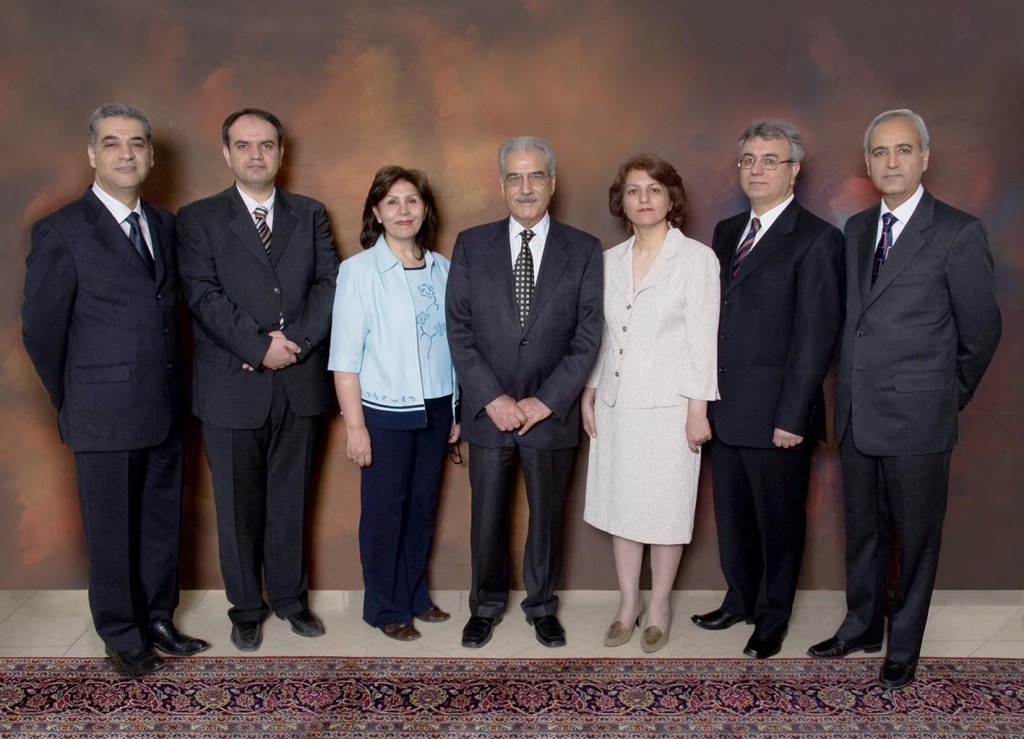
| 7 Baha'i Leaders (Yaran) in prison since 2008. They did not have a fair trial and had very little access to legal representation, even though Shirin Ebadi (first Muslim woman to be awarded the Nobel Peace Prize) agreed to represent them. |
![]() |
| Baha'is have been persecuted in Iran since the Baha'i Faith began in in the mid-1800s. This image was published in a Persian magazine in 1911. |
Sunday, October 7, 2012
Islamic Reform Abstract
Zackery M. Heern. The Emergence of Modern Shi'ism: Islamic Reform in Iraq and Iran. Oxford: Oneworld Publications, 2014.
This book takes a fresh look at the foundations of modern Islam. Scholars often locate the origins of the modern Islamic world in European colonialism or Islamic reactions to European modernity. This study, however, focuses on the rise of Islamic movements indigenous to the Middle East, which developed in direct response to the collapse and decentralization of the Islamic gunpowder empires. Arguing that the Usuli movement, as well as Wahhabism and neo-Sufism, emerged in reaction to the disintegration and political decentralization of the Safavid, Ottoman, and Mughal empires, this book specifically highlights the emergence of Usuli Shi‘ism in the 18th and 19th centuries. The long-term impact of the Usuli revival was that Shi‘i clerics gained unprecedented social, political, and economic power in Iran and southern Iraq. Usuli clerics claimed authority to issue binding legal judgments, which, they argue, must be observed by all Shi‘is. By the early 19th century, Usulism emerged as a popular, fiercely independent, transnational Islamic movement. The Usuli clerics have often operated at the heart of social and political developments in modern Iraq and Iran and today dominate the politics of the region.
Saturday, October 6, 2012
Key Islamic Terms
ahl al-bayt familial descendents of Muhammad
Akhbari
traditionist, scripturalist, Twelver Shi‘i school of thought that stresses the
importance of scripture as the only real source of knowledge and authority
‘alim scholar, learned
amal
al-ta’ifa the righteous sect, reference to Shi‘ism
used by Shi‘is
‘aql
reason, usually implies Aristotelian logic
al-‘aql al-hissi sensible reasoning
‘arif enlightened
knower
asl original
legal case
‘Atabat
lit. thresholds, Shi‘i cities in Iraq, including Najaf, Karbala, Hilla, and
Samara which contain shrines for remains of holy Shi‘i figures
‘azan call
to prayer
bab
al-ijtihad An important debate among early modern
Muslim scholars was whether the gate of ijtihad was opened or closed. See also ijtihad.
bab
al-‘ilm gate of knowledge
badiha common
knowledge
batin
inner or esoteric knowledge derived through inspiration, as opposed to exoteric
knowledge (zuhur)
bida‘
blameworthy innovation
dalil
(pl. dalala) indicator, as a legal term dalil is a proof that
indicates true knowledge
dalil
‘aqli rational indicator
dalil
shar‘i indicator from the Lawgiver (God)
da’wa
missionary activity
dhimmi
protected status granted to non-Muslims by Muslim rulers
din-i
ilahi lit. Divine Faith, syncretic belief system
of Mughal emperor Akbar
fana’
ceasing to exist, annihilation in God, highest state of Islamic mysticism
fatwa
legal judgment issued by a legal official
fiqh
Islamic jurisprudence
furqan intuitive
knowledge
furu‘ al-fiqh
positive law, lit. branches of jurisprudence
Hadith
collection of reports of the sayings and actions of Muhammad (and the Imams for
Shi‘is)
haqiqa
absolute reality, the ultimate non-relative truth, truth according to God
hawza
Shi‘i seminary or educational system emphasizing the study of Islamic law, also
madrasa
hikma
(or hikmat) mystical philosophy, wisdom
hikmat
al-ilahi see ishraqi
al-hikma
al-muta‘aliya transcendent wisdom
hujja (or hujjat)
proof
hujjiyya
probative force, authoritativeness
hukm legal
ruling
‘ibadat
commands related to worship or ritual duty
Idrisi
early modern Sufi movement established by Ahmad Ibn Idris al-Fasi (1760-1837)
ihtiyat
caution
ijaza
lit. permission, license or diploma issued from cleric to student indicating
the permissibility for the student to exercise the rights of a jurist
ijma‘ legal
consensus
ijma‘
zanni conjectural consensus
ijtihad
independent personal judgment exercised by a jurist (mujtahid) based on
the principles of Islamic law (usul al-fiqh)
ikhtilaf
disagreement, opposite of consensus (ijma‘)
‘illa ratio legis, rationale, effect
cause
‘ilm
knowledge
‘ilm al-khawass
special knowledge
Imam
According to Shi‘is, Imams are successors of Muhammad, believed to be endowed
with infallibility (‘isma)
imam
jum‘a Friday prayer leader
Ishraqi (or
hikmat al-ilahi) theosophy or illuminationist philosophy that originated
with Shihab al-Din Yahya Suhrawardi (d. 1191), who promoted the idea that true
knowledge is the result of both rational and intuitive emanations from the mind
‘isma
sinless, infallible, see ma‘sum
isnad chain
of transmission of a hadith report
istihsan
juristic preference
istishab al-hal
presumption of continuance
istislah
public welfare or interest
jahiliyya
ignorance
jihad
holy war, struggle
jizya head
tax paid to Muslim rulers by non-Muslims
kadkhoda
village leader
kafir
(pl. kuffar) infidel, unbeliever
kalam
theology
karamat
miraculous phenomena
kashf
divine inspiration, intuitive revelation
Kashfiyya see
Shaykhi
khabar
(pl. akhbar) hadith report
khabar al-wahid
(pl. akhbar al-ahad) isolated hadith report, hadith report that does not
have multiple transmitters
khawass elite, special
khums (lit.
one-fifth) Islamic tax paid on specific items
lisan
language
lugha
language, linguistic
al-lugha
al-‘urfiyya customary language
luti
thug, gang, homosexual
madhhab
school of Islamic legal thought
madrasa school,
often denoting religious school
mafhum (pl.
mafahim) linguistic implication
Mahdi
Hidden Imam, According to Twelver Shi‘is, the Mahdi (Muhammad al-Mahdi) is the
twelfth Imam, who has been in a state of spiritual occultation since 873
CE. In other words, the Mahdi (or qa’im, lit. the one who will arise)
did not die, but is also not physically present in the world – although he
allegedly may periodically manifest himself on the physical plane
marja‘
al-taqlid (lit. source of emulation), Shi‘i jurist (mujtahid)
whose legal judgments are emulated by lay Shi‘is (muqallid)
maslaha
public interest, common benefit
ma‘sum
infallible, sinless, often attributed to the Shi‘i Imams
matn text
of a hadith report
millet confessional
community
mirghadab executioner
mu‘amalat
non-ritual legal duties
mu’assis founder
mufti legal
judge
mujaddid
renewer or reviver of Islam thought to appear every century. Based on the
prophetic hadith: “At the beginning of every hundred years, God will send a
person who will revive the religion (i.e. Islam) for the community (ummah).”
mujtahid legal
scholar who carries out ijtihad
mukallaf
sane person who is subject to the law
mulazama
belief that revelation and reason are in complete agreement
mullabashi
lit. head cleric, highest ranking government appointed cleric, especially in
the Safavid period
muqallid emulator,
follower of a mujtahid, lay Shi‘i
murawwij reviver
mutashabih
unclear, ambiguous Qur’an verse
mutawatir
widespread, hadith report transmitted through multiple chains of hadith
transmitters
Muwahiddun
lit. Monotheists, Unitarians, title by which Wahhabis initially
referred to themselves
na’ib
deputy, see al-niyaba al-‘amma
najes
ritual impurity
naql
scripture, foundational Islamic texts (i.e. Qur’an and Hadith)
al-niyaba
al-‘amma general vicegerency on behalf of
the Imam
qadi
Islamic legal judge
qarina
textual evidence used to derive a non-literal meaning
qat‘ legal
certainty
qiyas
analogy, principle used by some legal scholars to formulate a new law
qizilbash
lit. read head, supporters of Shah Isma‘il who assisted him in establishing the
Safavid dynasty
qutb
al-zaman axis of the age
ra’y personal legal judgment
rijal
Hadith transmitters
riwayat companions
of Muhammad
sadr chief
religious dignitary
sahib al-zaman Lord
of the age, one of the titles of the Mahdi
shakk legal
doubt, opposite of certainty (qat‘)
shafa‘a
intercession
salah
prayer
sharh (pl. shuruh)
textual commentary
shari‘a
God’s law
shaykh (or pir)
Sufi master
Shaykhi
Shi‘i school of thought established by Shaykh Ahmad al-Ahsa’i, also known as
Kashfiyya
shirk
idolatry, polytheism
silsila
chain
Sunna
Islamic legal custom and practice
ta‘adiyya
transference, method of transferring a ruling from an original case to a novel
case
ta‘arud
contradiction found within revelatory texts
tabaqat
biographical dictionaries of Shi‘i clerics
tabarra’iyan those
who publicly curse the first two Caliphs
tafsir
explanation of revelatory texts
takfir
declaration of unbelief or infidelity
takhyir
legal choice
taklif
legal obligation
tanqih al-manat
discovering the rationale of a law with certainty
taqiyya
dissimulation
taqlid
emulation of an Islamic scholar’s legal judgment(s), precedent
taqwa fear
of God
tariqa
Muhammadiyya brotherhood or Sufi order of Muhammad
tawqifi (or
tawaqquf ) suspension of a legal decision
tawhid
monotheism, oneness of God
ta’wil
interpretation of a text, exegesis
‘ulama religious scholars
‘urf
custom, customary
usul al-din
theological principles
usul
al-fiqh principles of Islamic law
Usuli
rationalist, Twelver Shi‘i school of thought that accepts the use of ijtihad
and other extra-textual methods of deriving knowledge and authority. Usulis are
often referred to as Mujtahids.
Wahhabi puritanical
Sunni movement established by Muhammad Ibn ‘Abd al-Wahhab (1703-1792),
also known as Muwahiddun
wahy
prophetic revelation, the manner in which Muhammad received the Qur’an from God
waqf
religious endowment
al-wilayat
al-takyini cosmic guardianship
yaqin
certainty
al-yaqin al-‘adi ordinary certainty
zahir outer or exoteric knowledge, as opposed to
esoteric knowledge (batin)
zann legal
opinion, probability
zawiya
Islamic religious school or monastery
zikrullah
remembrance of God
zina’
extramarital sex
Subscribe to:
Posts (Atom)